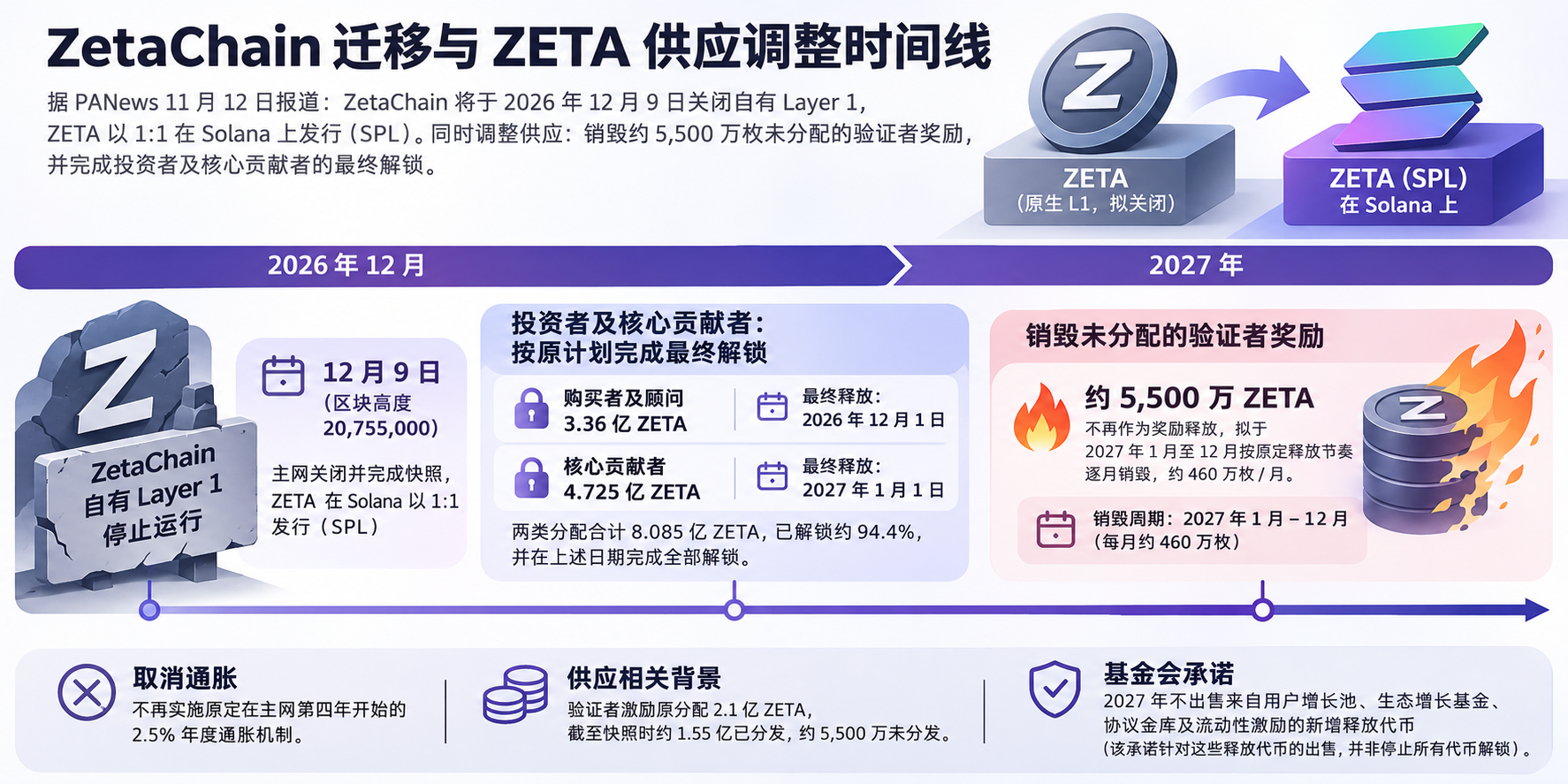
Originally reported by PANews on November 12, 2026, at 15:00 UTC+8. For builders working with ZetaChain, the central change is a planned end to its independent Layer 1 network—not a routine token transfer between live chains. Under the migration plan described by PANews, the network is expected to stop at block 20,755,000, around December 9, 2026. ZETA would then be issued on Solana as an SPL token at a 1:1 ratio.
What changes at the snapshot
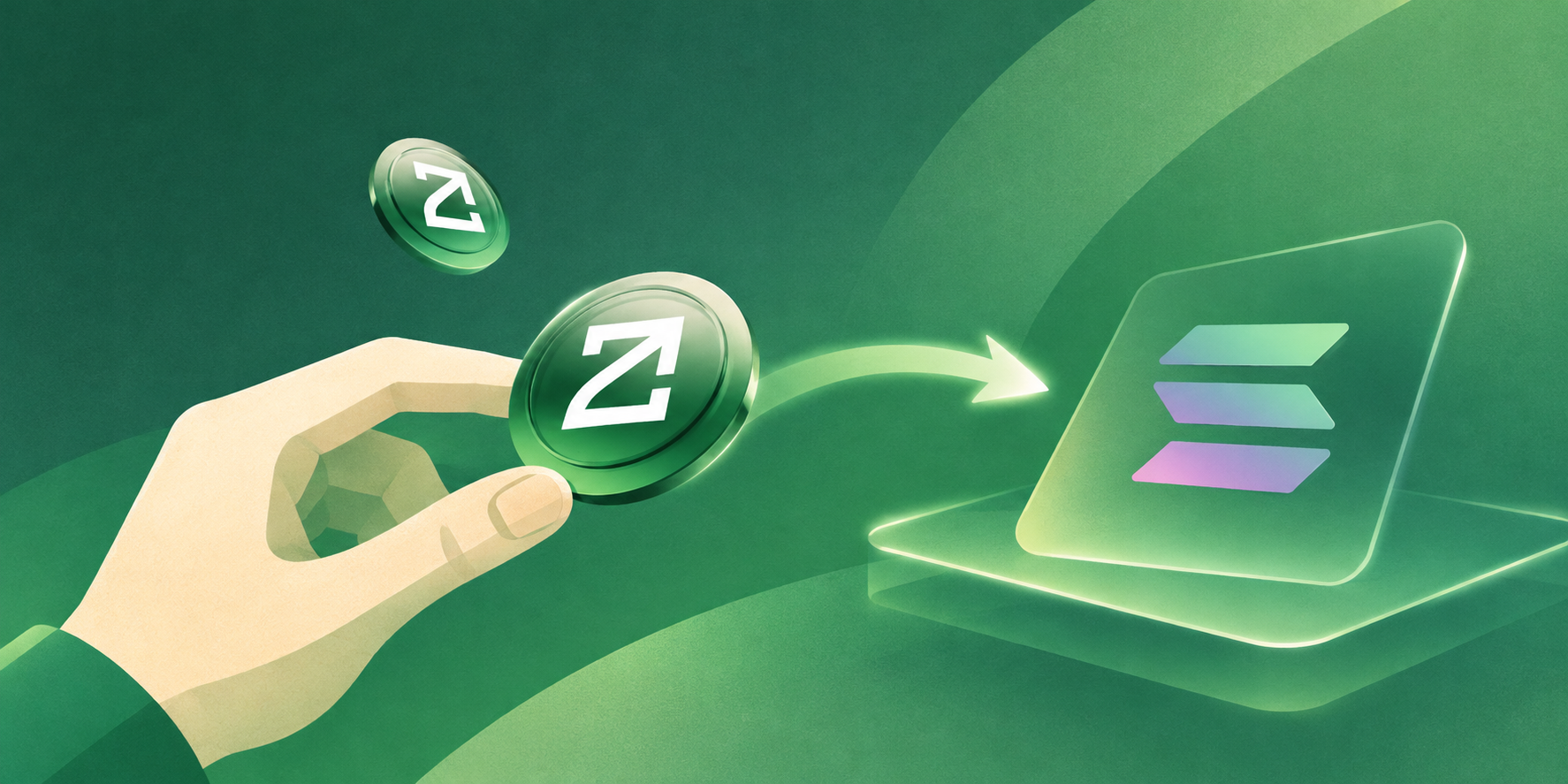
The plan calls for a snapshot of native ZETA balances at the shutdown block. ZetaChain would issue an equivalent amount of SPL ZETA, then revoke the new token’s minting authority. The token’s name and ticker would remain unchanged. Validators would shut down, and the original network would not restart.
According to the reported claim process, holders of native ZETA would connect their existing wallet through ZetaChain’s official migration service or ZetaHub and sign a message specifying a Solana receiving address. Claims would not require a third-party bridge, a fee or an advance SOL balance; the minimum claim balance is 10 ZETA. The snapshot is intended to include wallet balances, delegated stake, unstaking balances and unclaimed rewards. Staking rewards would stop accruing at the snapshot block.
Exchange-held ZETA would be converted by the relevant exchange, subject to its own announcement. Holders of wrapped ZETA or liquidity-pool positions would need to unwrap or withdraw before the snapshot so the assets are in a wallet able to sign a claim. Separately, ZRC-20 cross-chain assets remaining on ZetaChain could be claimed back to their original chains through ZetaHub from December 9; the reported process covers nine origin networks and has a $5 minimum per asset. Existing ERC-20 ZETA on Ethereum is not part of this native-network migration.
At the time of the original report, ZetaChain said Hacken was independently auditing the Solana distribution program and claim service; the audit report had not yet been published. ZetaChain also said it would release snapshot and verification data, mint records and program verification information. ZetaScan was expected to retain historical transaction search, with read-only archive nodes maintained until at least October 31, 2027.
Supply changes alongside the shutdown
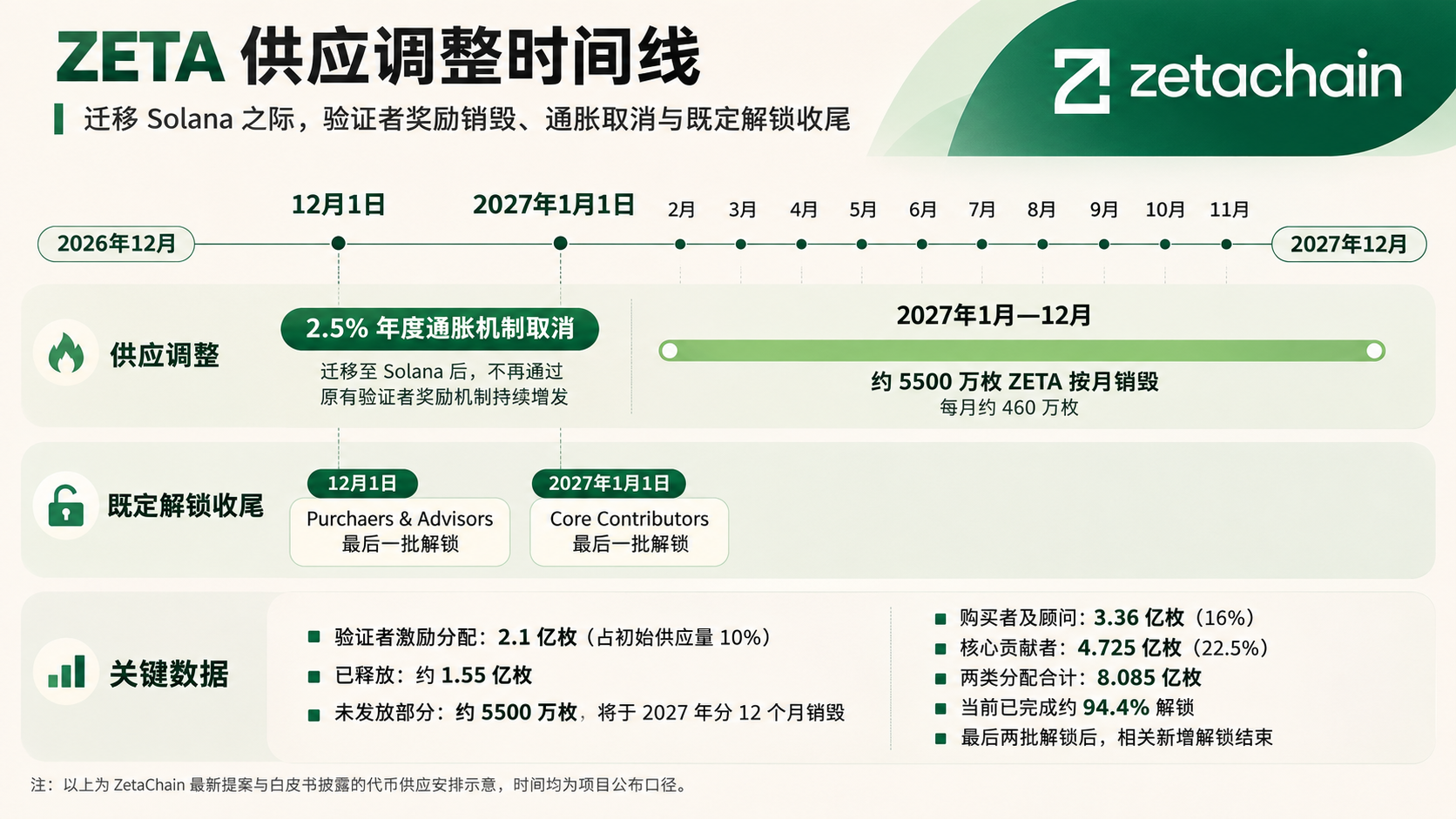
The reported plan removes the old validator-reward mechanism and the previously scheduled 2.5% annual inflation that would have begun in the mainnet’s fourth year. Of the 210 million ZETA allocated to validator incentives within the original 2.1 billion maximum supply, approximately 155 million had been distributed by the migration snapshot, according to the plan. ZetaChain intends to burn the roughly 55 million undistributed tokens monthly from January through December 2027, at about 4.6 million per month, rather than release them as rewards.
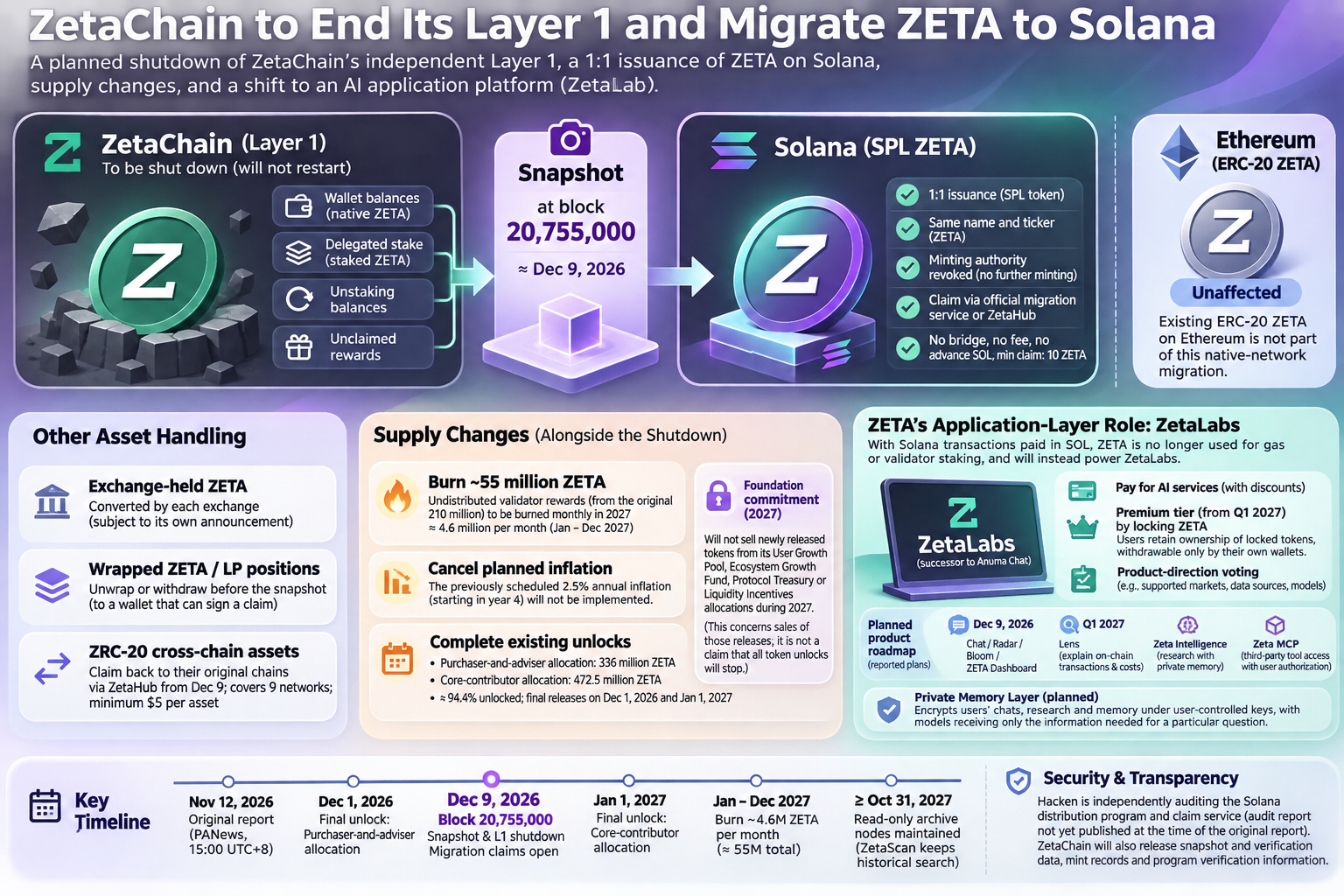
Existing purchaser-and-adviser and core-contributor allocations—336 million and 472.5 million ZETA respectively—would finish their scheduled unlocks. PANews reported that about 94.4% of those allocations had unlocked, with final releases scheduled for December 1, 2026, and January 1, 2027. The foundation also committed not to sell newly released tokens from its User Growth Pool, Ecosystem Growth Fund, Protocol Treasury or Liquidity Incentives allocations during 2027. That commitment concerns sales of those releases; it is not a claim that all token unlocks will stop.
The proposed application-layer role for ZETA
With Solana transactions paid for in SOL, ZETA would no longer serve as gas or a validator-staking token on ZetaChain’s own Layer 1. The revised white paper instead describes ZETA payments for ZetaLabs AI services and associated discounts, product-direction voting, and a planned Premium tier accessible by locking ZETA from the first quarter of 2027. ZetaChain says users would retain ownership of locked tokens and that only their own wallets could withdraw them. The product is also intended to offer a daily free allowance, with additional services payable in ZETA, USDC or by credit card; ZETA would not be required for basic access.
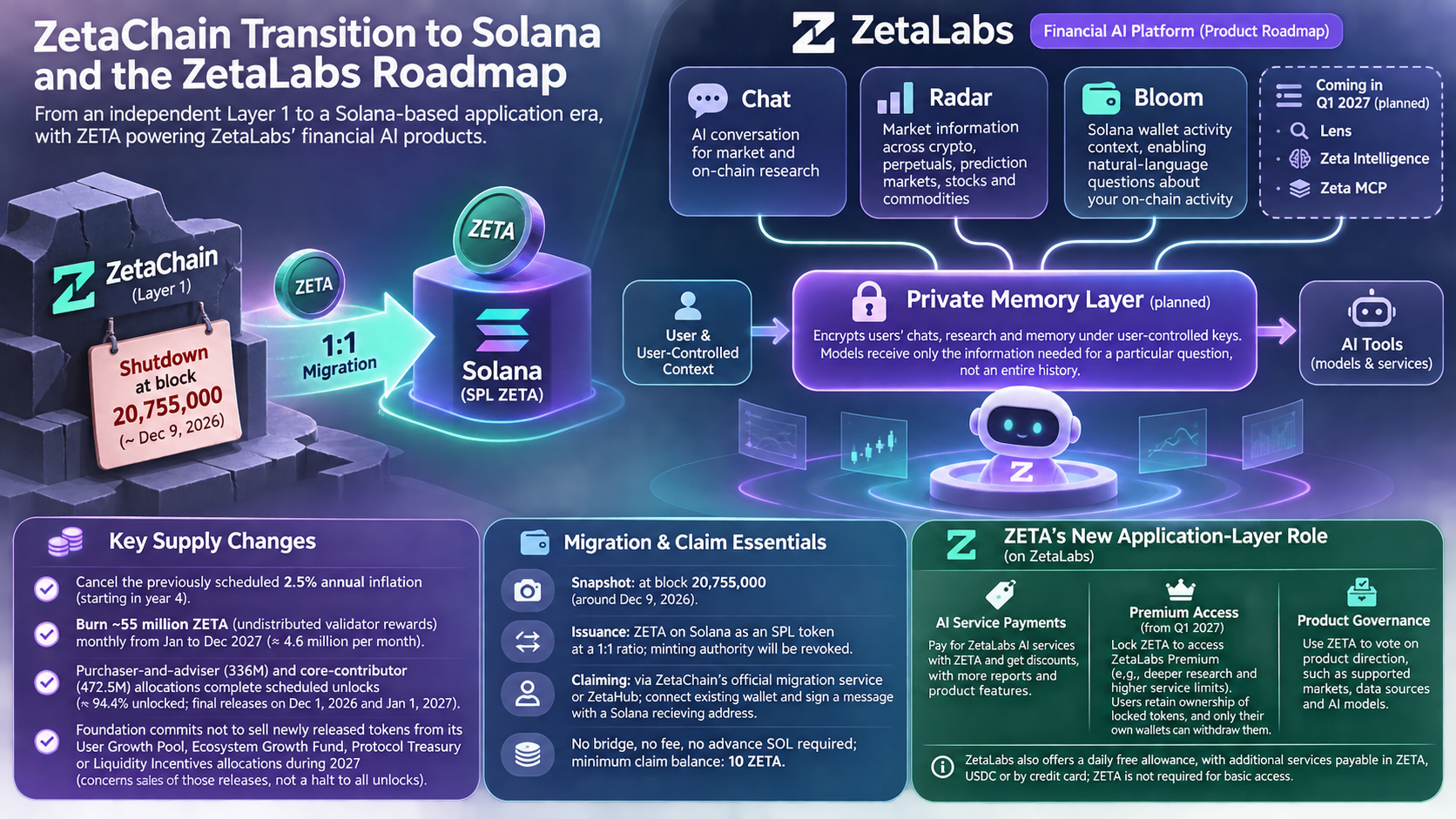
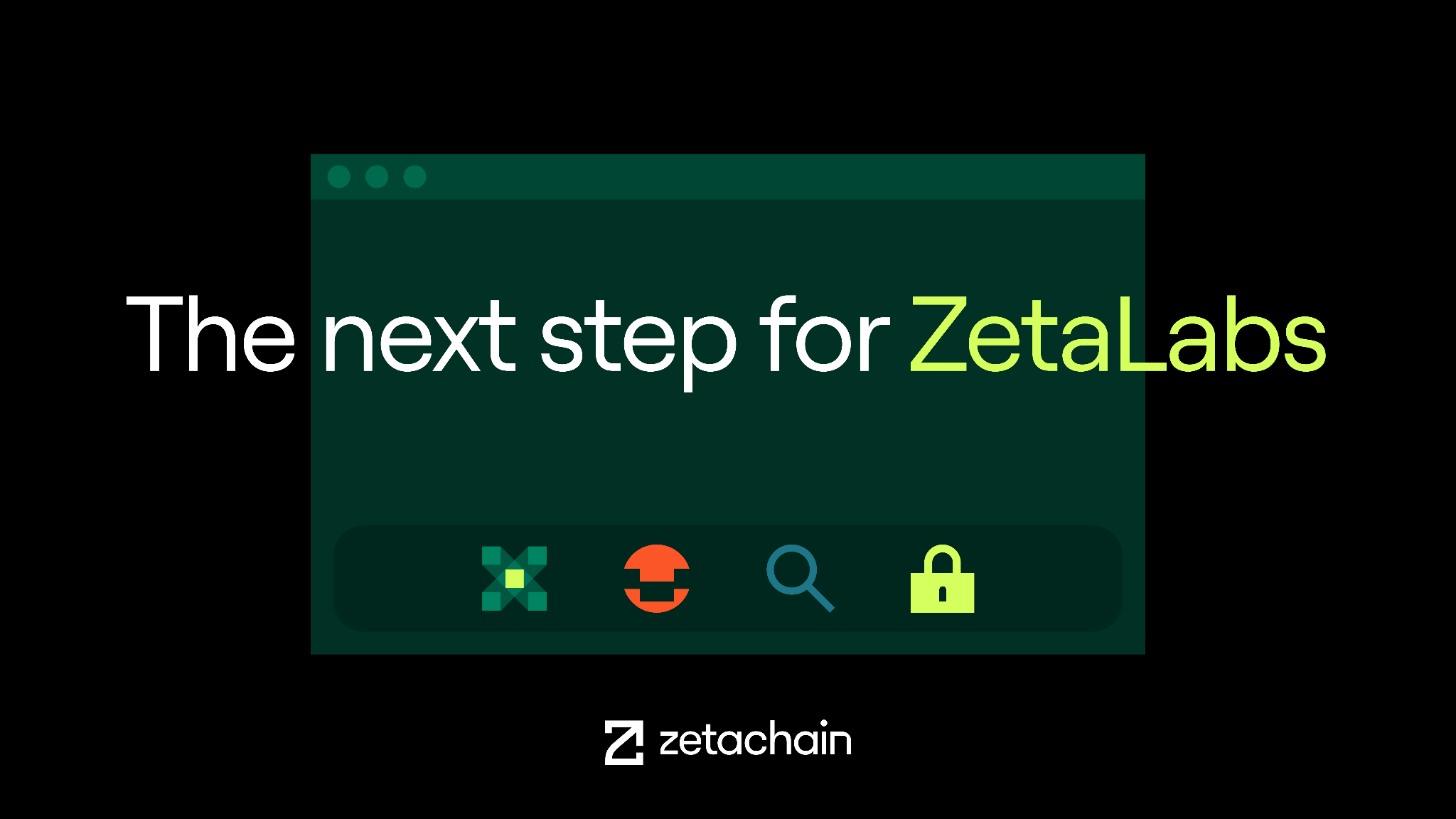
ZetaLabs is the planned successor to Anuma Chat, which launched in February 2026. Its roadmap called for Chat, a market-information feed named Radar, a Solana-wallet activity feature named Bloom, and a ZETA Dashboard on December 9. For the first quarter of 2027, the roadmap also listed Lens for explaining individual on-chain transactions and their costs, Zeta Intelligence for research using private memory, and Zeta MCP for third-party tool access subject to user authorization. ZetaChain describes its Private Memory Layer as encrypting users’ chats, research and memory under user-controlled keys, with models receiving information needed for a particular question rather than an entire history. These are reported product plans and descriptions, not evidence that the planned features had launched or met their stated privacy goals at the time of publication.
Source: panewslab.com (originally published 2026-11-12 15:00 UTC+8)