NEAR Protocol said its House of Stake ratified HSP-029, a proposal to lower the network’s maximum token issuance rate from 2.5% to 1.6% over 24 months. The proposal received 99.96% of votes in favor, and the Security Council did not veto it. The vote did not change the issuance cap: a full quarter must pass after ratification before the change can take effect, and activation requires validators to approve and implement a network upgrade.
If activated, the upgrade would lower the cap each epoch, rather than cut it to 1.6% all at once. NEAR estimates the network would issue 11.8 million fewer tokens over two years than it would under the 2.5% cap. The allocation would stay the same: 90% of newly issued NEAR would go to staking participants and 10% to the treasury. Lower issuance could limit dilution for holders, but it would also reduce gross staking rewards.
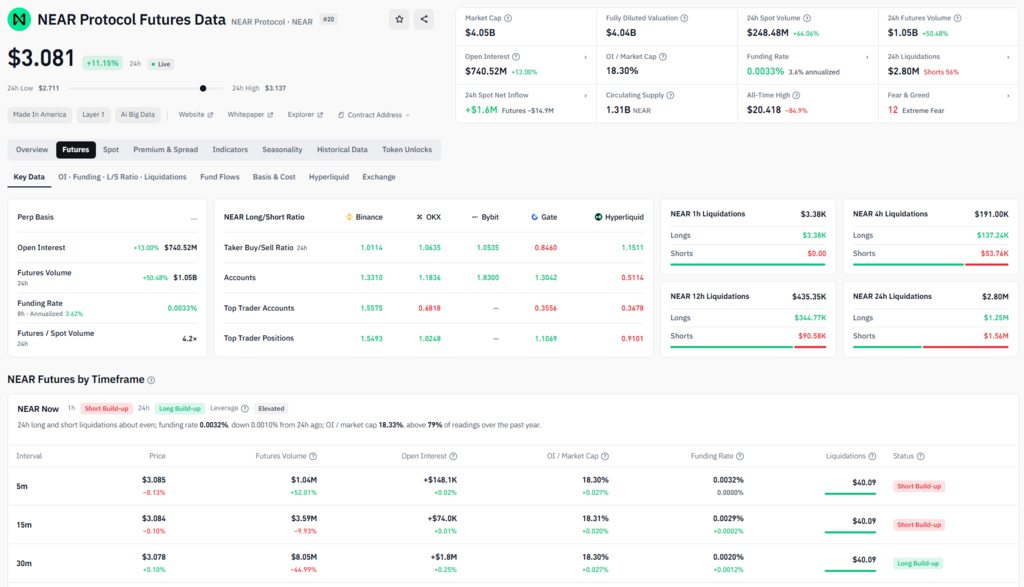
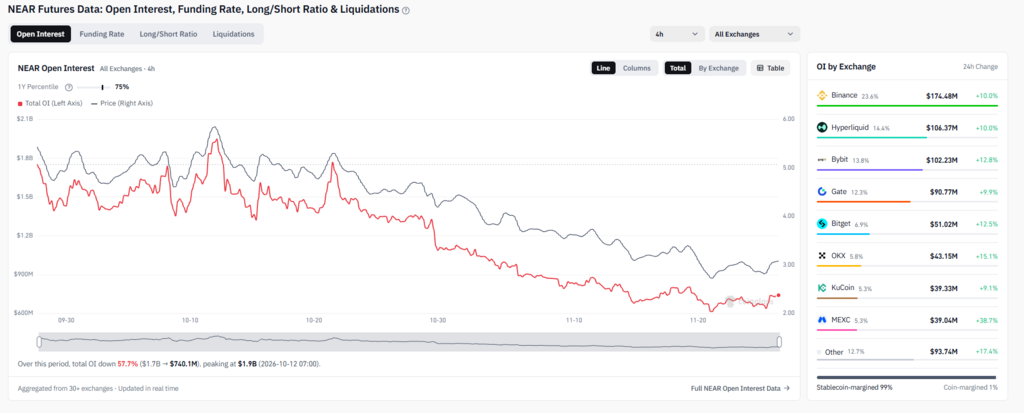
NEAR’s rebound faces resistance near $3.20
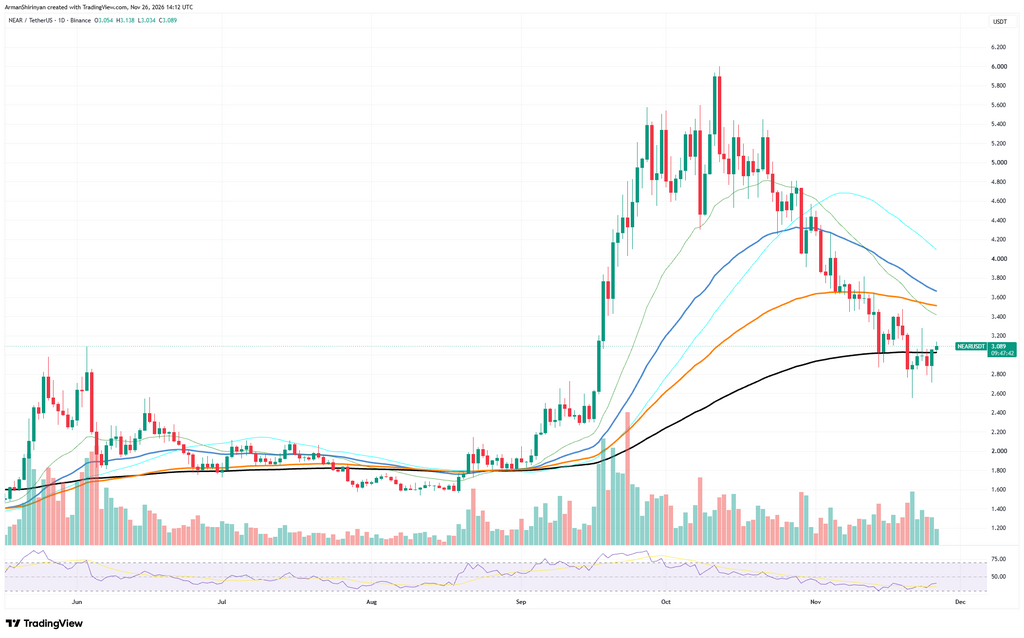
At 11:00 a.m. UTC+8 on November 27, 2026, NEAR was trading around $3.09 after recovering from its November low near $2.60. That put it above its long-term moving average near $3.00, but still well below its October high near $5.90.
The chart analysis identified $3.00–$3.10 as a potential support zone if NEAR could hold above it. The first potential resistance was at $3.20–$3.30, followed by the short- and medium-term moving averages near $3.45–$3.75. Both averages were still sloping downward.
The Relative Strength Index, a measure of price momentum, had recovered after nearing oversold territory but remained below 50. The analysis did not treat the rebound as a confirmed reversal: that would require a sustained move above resistance on higher trading volume. A drop below $2.80, by contrast, could bring the November low near $2.60 back into play.