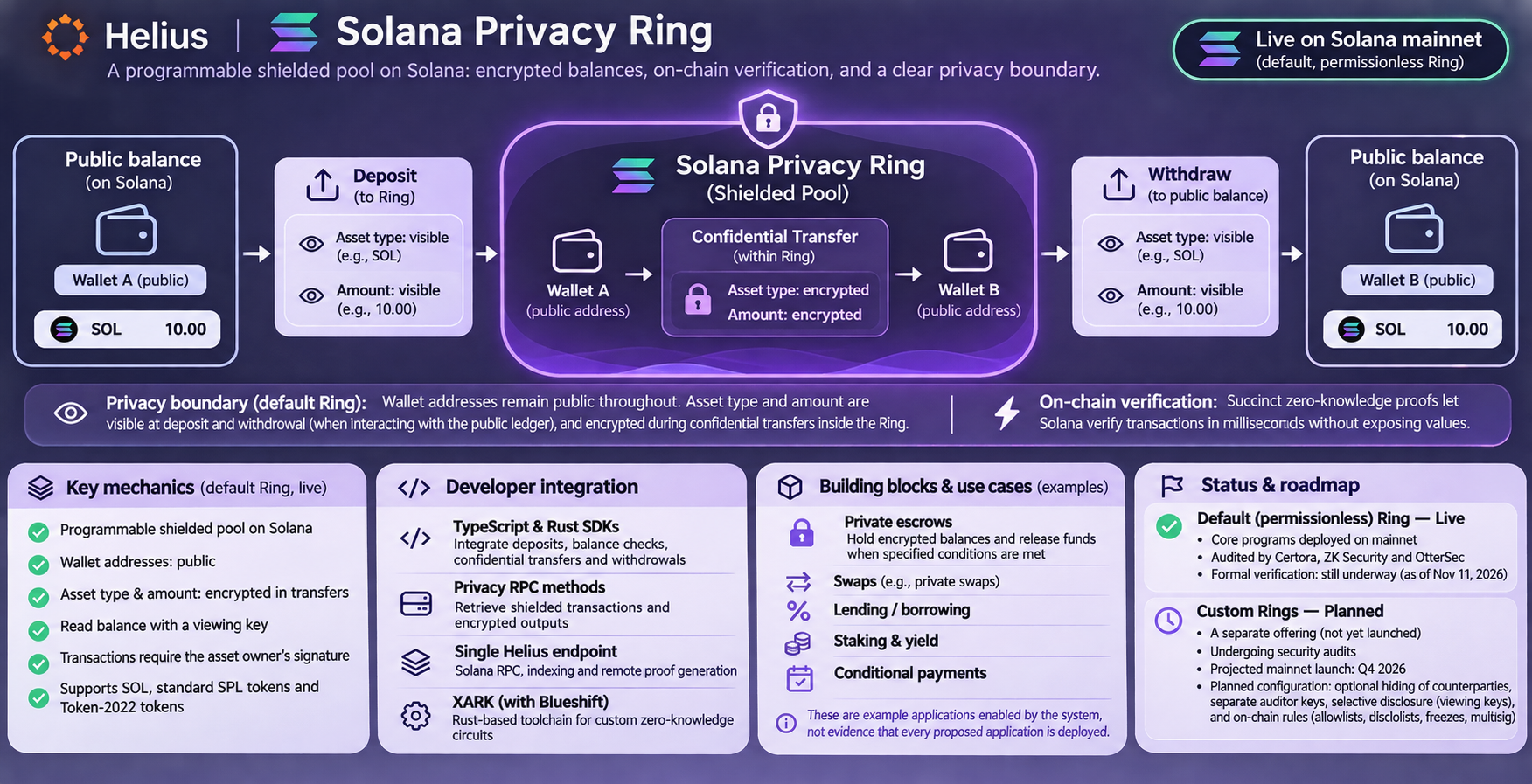
For builders who need a Solana application to hold or transfer confidential balances, Helius says its default, permissionless Solana Privacy Ring is available on mainnet. In an account published on November 11, 2026, Helius described the system as a programmable shielded pool: an on-chain pool that stores encrypted balances while allowing transactions to be verified on Solana.
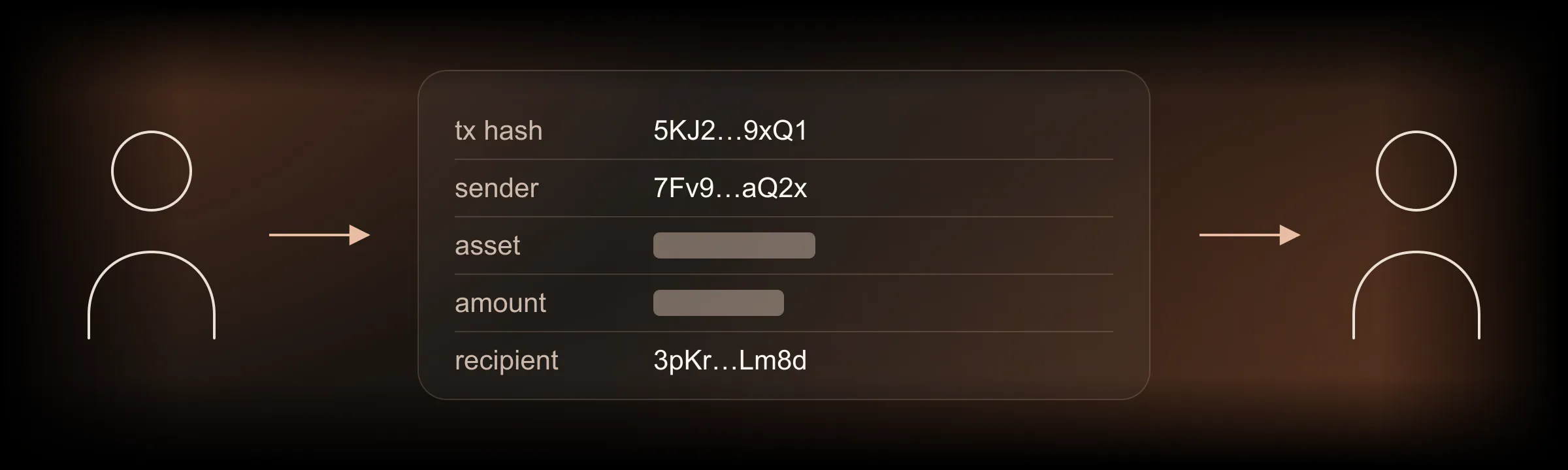
In the default Ring, wallet addresses remain public, but the asset type and transfer amount are encrypted. Helius says an account holder can read their balance with a viewing key, and transactions still require the asset owner’s signature. The system supports SOL, standard SPL tokens and Token-2022 tokens, according to Helius. It says succinct zero-knowledge proofs let the chain check transaction validity in milliseconds without exposing the protected values.
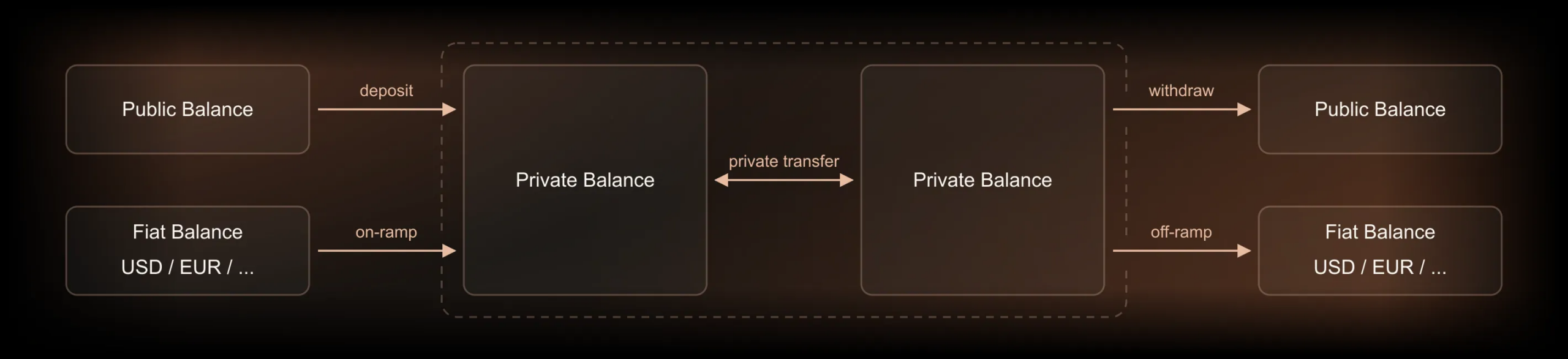
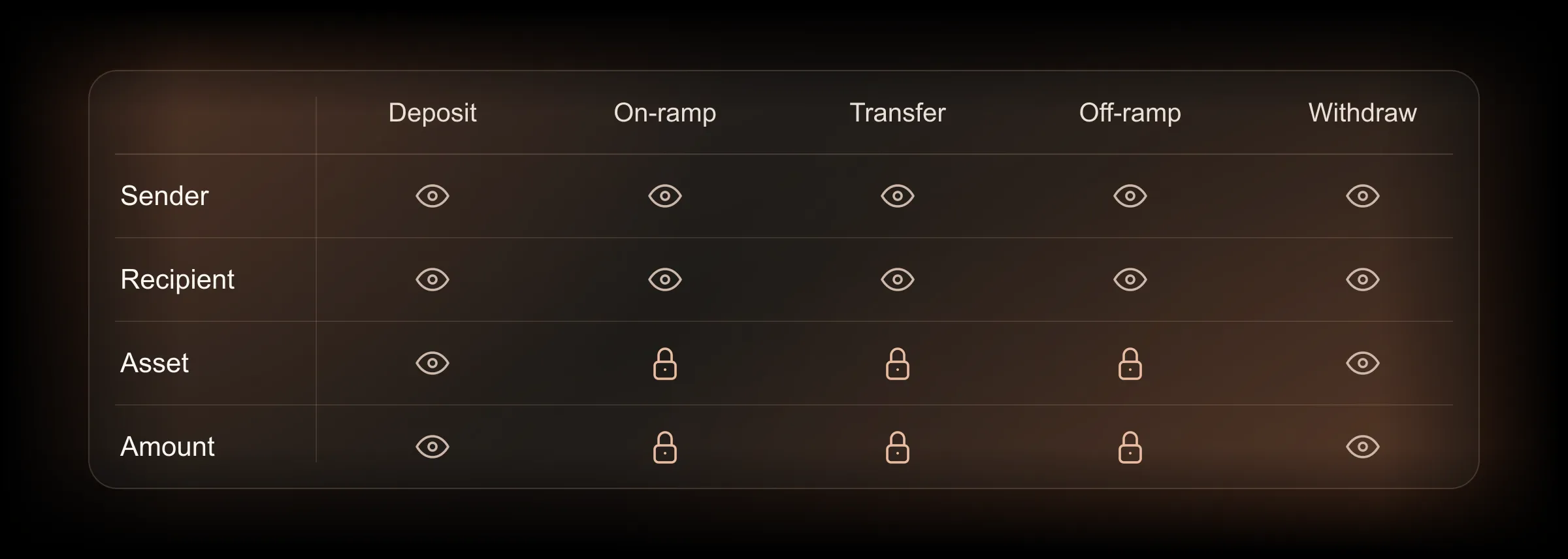
Where the privacy boundary changes
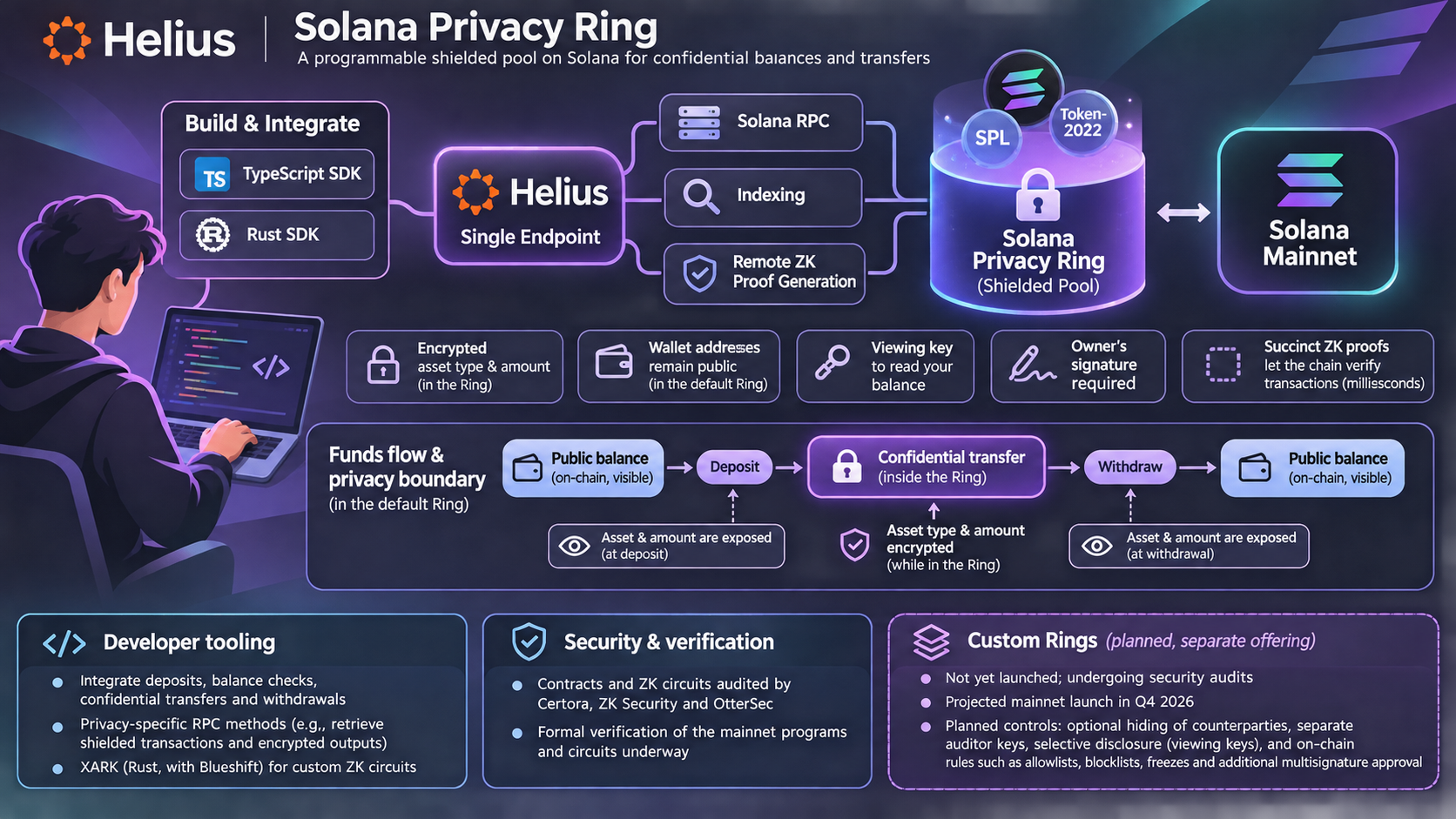
A user can deposit assets from a public balance, make a confidential transfer, then withdraw to a public balance. Helius notes that deposits and withdrawals expose the asset and amount where they interact with the public ledger. Builders therefore should not treat the default Ring as hiding every step of a funds flow.
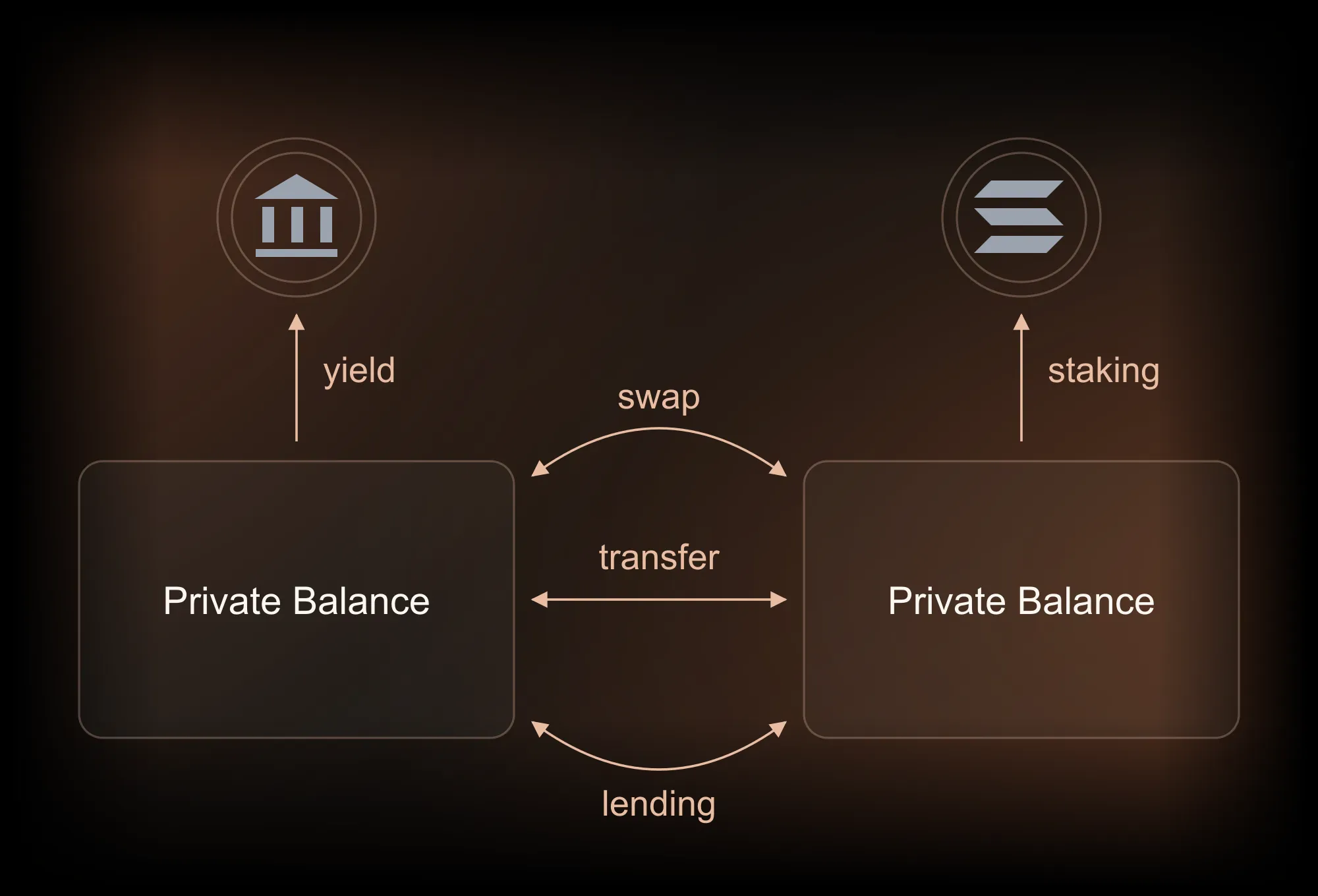
Helius says developers can integrate deposits, balance checks, confidential transfers and withdrawals through TypeScript and Rust SDKs. Its described tooling also includes privacy-specific RPC methods for retrieving shielded transactions and encrypted outputs, a single Helius endpoint for Solana RPC, indexing and remote proof generation, and XARK, a Rust-based toolchain developed with Blueshift for custom zero-knowledge circuits. Helius presents private escrows—which hold encrypted balances and release funds when specified conditions are met—as a building block for applications such as swaps and conditional payments; those examples are not evidence that every proposed application is deployed.
What is live, and what is planned
Helius says the default Ring’s core programs are deployed on mainnet and that Certora, ZK Security and OtterSec audited its contracts and zero-knowledge circuits. It also says formal verification of the mainnet programs and circuits was still underway at the time of the November report.
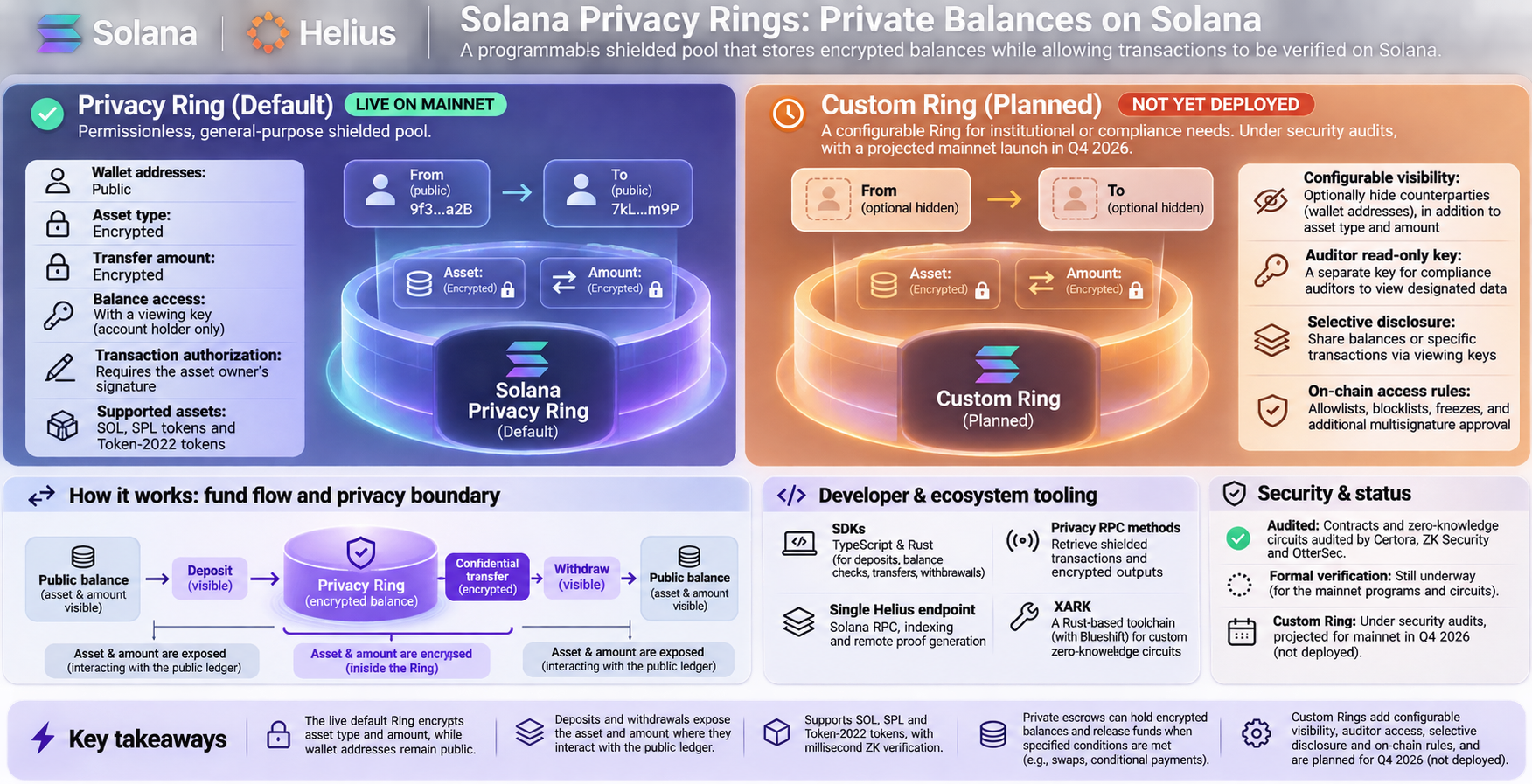
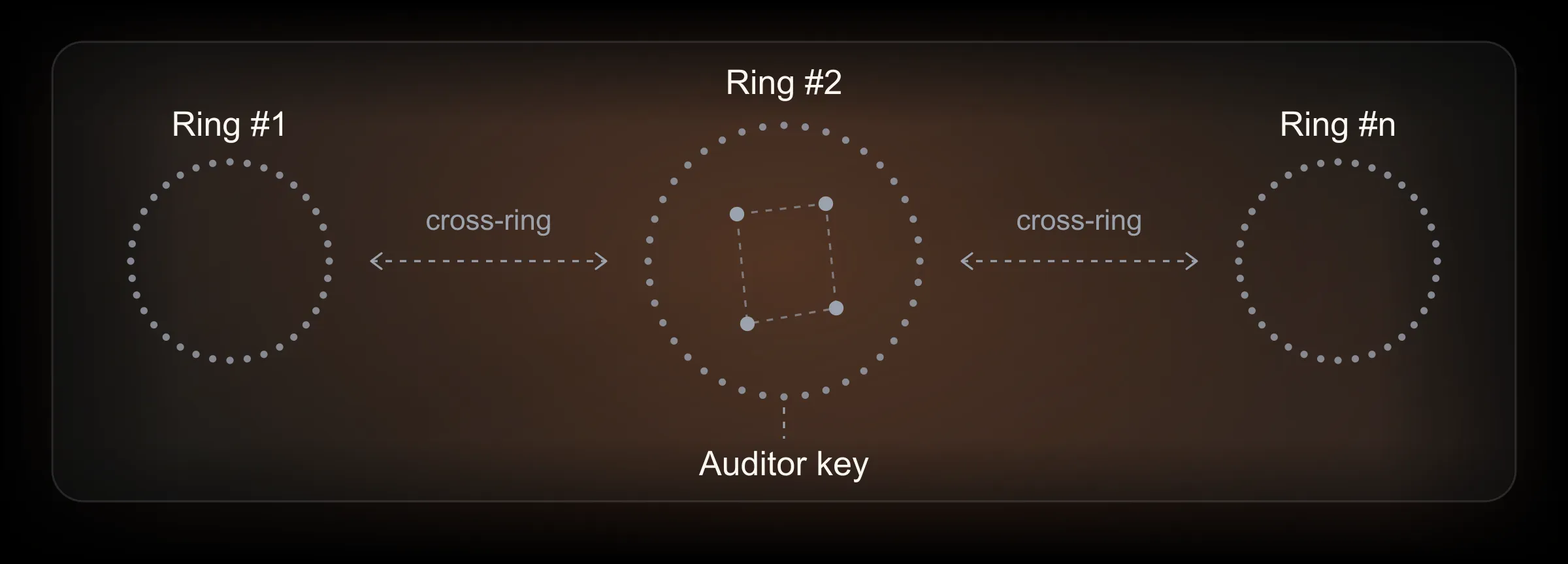
Custom Rings are a separate, not-yet-launched offering. Helius said they were undergoing security audits and projected a mainnet launch in the fourth quarter of 2026. The proposed configuration includes optional hiding of counterparties, separate read-only auditor keys, selective disclosure through viewing keys, and on-chain rules such as allowlists, blocklists, freezes and additional multisignature approval. Those planned controls should not be confused with the privacy properties of the live permissionless Ring.