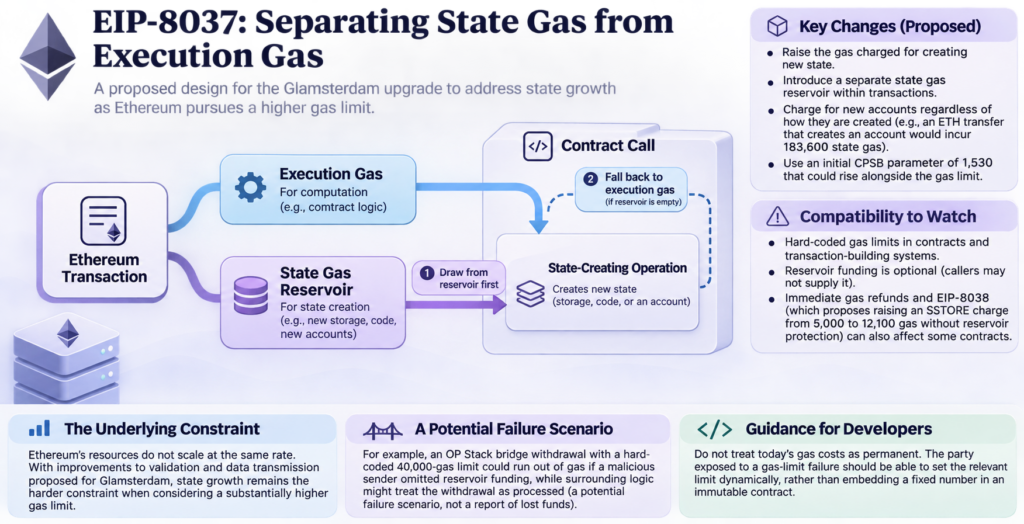
Creating a storage slot, deploying code or opening an account leaves data that Ethereum nodes must continue to carry. In an article published on November 16, 2026, Vitalik Buterin argued that this persistent state—not execution alone—is the constraint developers need to consider as Ethereum pursues a higher gas limit.
His focus was EIP-8037, a proposal associated with the Glamsterdam upgrade. It would raise the gas charged for creating new state while introducing a separate state gas reservoir within transactions. These were proposed changes in the article, not rules developers should assume were already active.
Why separate state gas from execution gas?
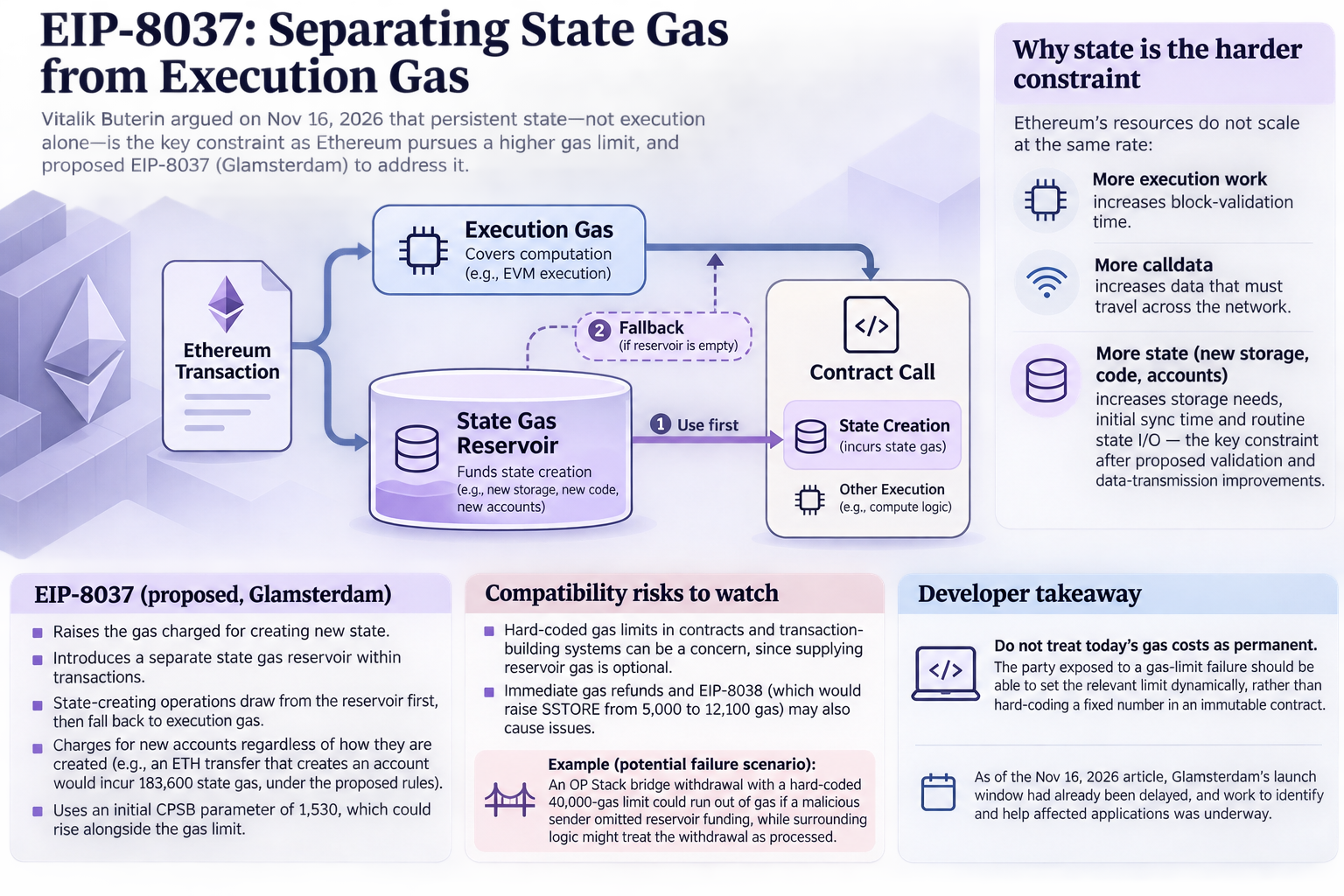
Buterin’s argument is that Ethereum’s resources do not scale at the same rate. More execution work increases block-validation time; more calldata increases data that must travel across the network. New state also increases storage needs, initial synchronization time and routine state input/output (I/O). He argued that improvements proposed for validation and data transmission make state growth the harder remaining constraint when considering a substantially higher gas limit.
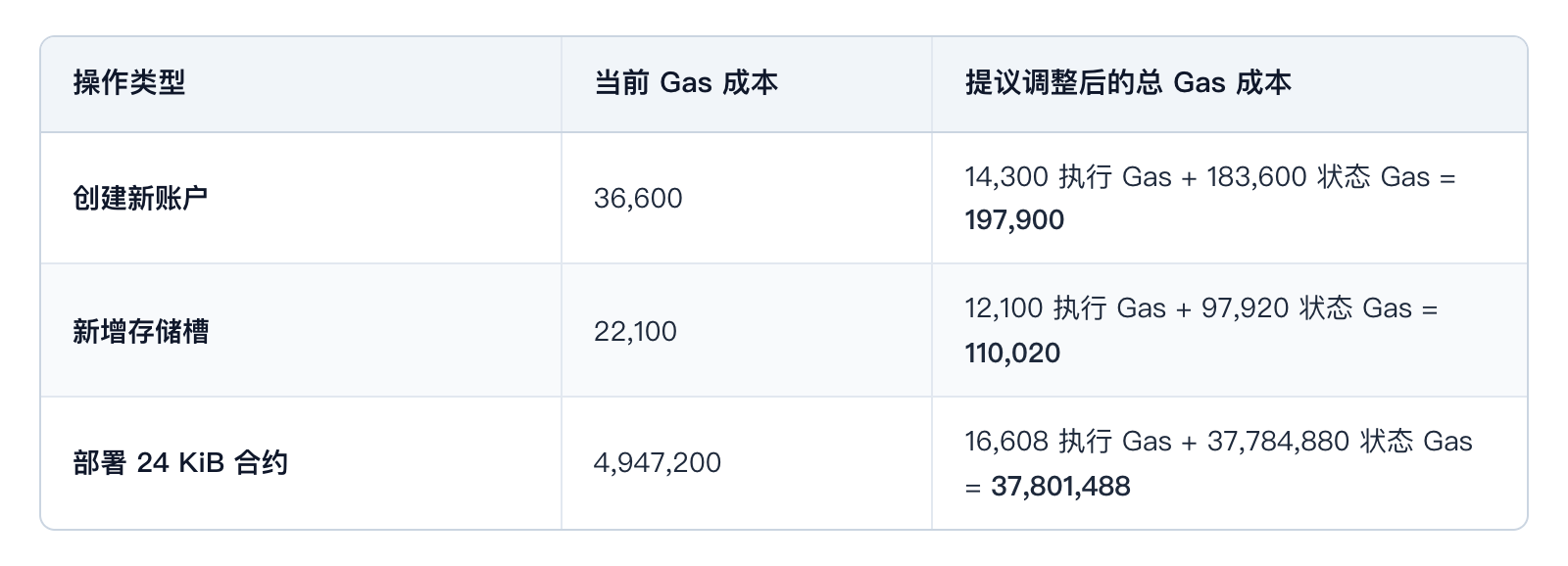
Under the EIP-8037 design he described, a transaction could fund state creation through a reservoir separate from its execution-gas allowance. State-creating operations would draw from the reservoir first and fall back to execution gas when it was empty. A parent contract could limit execution gas passed to a child call, but could not block that child’s access to the transaction’s state reservoir. Buterin said this arrangement would allow a full-size, 24 KiB contract deployment without making its state charge subject to the proposed 16.7 million execution-gas limit per transaction.
The proposal also aims to charge for new accounts regardless of how they are created. Buterin gave an ordinary ETH transfer that creates an account as an example: under the proposed rules, it would incur 183,600 state gas. He described an initial CPSB parameter of 1,530 that could rise alongside the gas limit.
Where existing contracts could run into trouble
The reservoir does not remove every compatibility risk. Buterin identified hard-coded gas limits in contracts and transaction-building systems as a particular concern. Supplying reservoir gas is optional, so an application cannot assume every caller will do so. He also discussed possible effects from immediate gas refunds and from EIP-8038, a separate proposal he said would raise an SSTORE charge from 5,000 to 12,100 gas without reservoir protection.
His example involving an OP Stack bridge was a potential failure scenario, not a report that funds had been lost: a withdrawal call with a hard-coded 40,000-gas limit could run out of gas if a malicious sender omitted reservoir funding, while surrounding logic might treat the withdrawal as processed.
For builders, the practical lesson Buterin drew is not to treat today’s gas costs as permanent. He recommended that the party exposed to a gas-limit failure be able to set the relevant limit dynamically, rather than having a fixed number embedded in an immutable contract. That does not establish that every existing contract is affected; it identifies an assumption worth checking in contracts, callers and transaction-building interfaces.
As of the article’s November 2026 reporting, Buterin said Glamsterdam’s launch window had already been delayed and work to identify and help affected applications was underway. He also listed possible longer-term changes to Ethereum’s state structure, blob format, transaction format and consensus rules. Those were expectations about a roadmap, not enacted specifications.