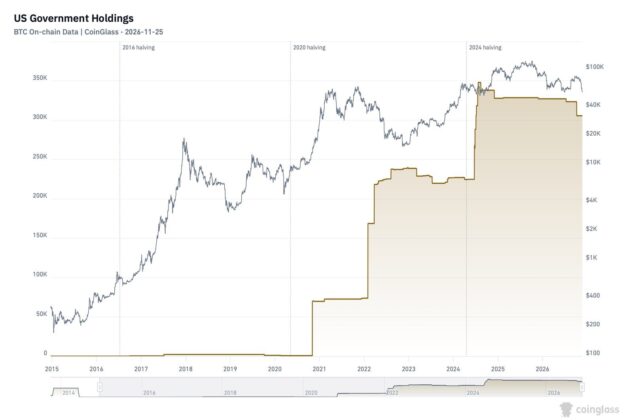
The House Financial Services Committee formally reported the amended American Reserve Modernization Act (H.R. 8957) on November 24, 2026, after approving it 28–21 in September. The bill would bar the federal government from selling Bitcoin in the US Strategic Bitcoin Reserve for at least 20 years after enactment. Its placement on the House Union Calendar makes it eligible for consideration by the full House, but no floor vote has been scheduled.
One holding period for the reserve
Under Section 5, the government could not sell, exchange or auction reserve Bitcoin, or pledge it as collateral, during the holding period. The May draft would have started a separate 20-year clock for each deposit. In the amended bill, the clock starts when the legislation becomes law. Adding Bitcoin later would not start a new 20-year term for that deposit.
President Donald Trump’s March 2025 executive order already set a policy against selling reserve Bitcoin. The bill would give the restriction a different legal footing: another administration could reverse an executive order, while changing a statutory requirement would generally require Congress to act. When Rep. Nick Begich, an Alaska Republican, and Rep. Jared Golden, a Maine Democrat, introduced the bill in May, Golden argued that giving the reserve “the weight of law” would make federal cryptocurrency policy more stable, according to Begich’s office.
The end of the 20-year period would not automatically authorize Treasury to sell the entire reserve. The bill provides for recommendations to release up to 10% of reserve assets over any two-year period. Treasury would also examine whether national security or financial stability concerns might justify earlier sales. Congress would have to consider any proposed legislative exceptions.
Annual reporting, not quarterly proof of reserves
The May draft called for quarterly proof-of-reserves reports to verify the government’s holdings. The amended bill instead calls for annual public reporting, with support from an independent auditor experienced in cryptographic verification and oversight from the US Comptroller General. That would leave a year between required public reports rather than three months.
A study of acquisitions, not an order to buy
Section 9 would direct Treasury and the Commerce Department to examine whether the government could acquire more Bitcoin without adding to the national debt or imposing additional costs on taxpayers. One option they would study is converting other government-owned digital assets into Bitcoin.
The bill sets neither a purchase schedule nor a minimum acquisition target. It does not authorize new taxes, borrowing or deficit spending to finance purchases. The proposed holding requirement would therefore restrict what the government could do with reserve Bitcoin without obligating it to acquire more.