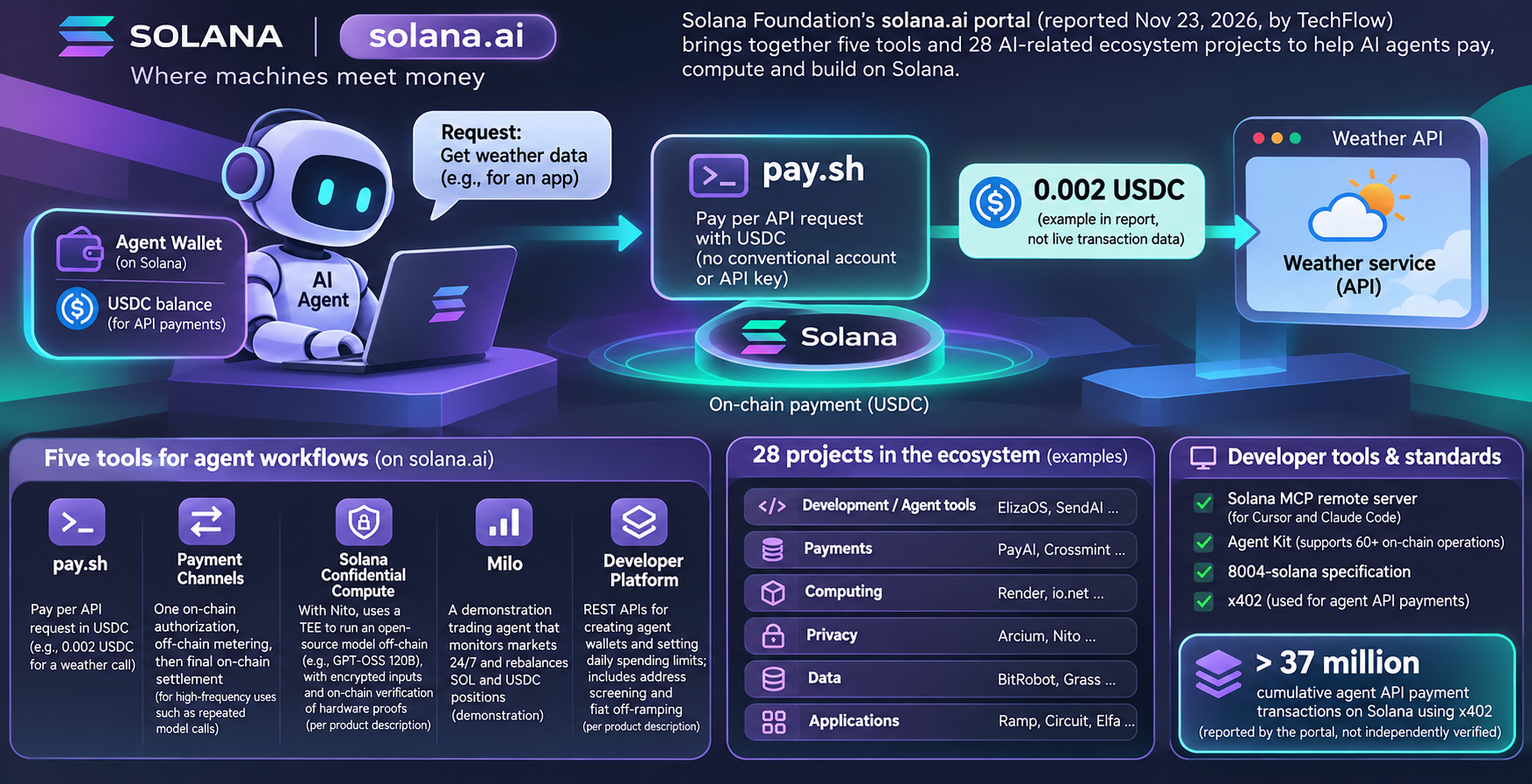
For developers building an AI agent that needs to pay for an API call, the practical question is how to give it a wallet, control its spending and settle frequent requests. In a report published on November 23, 2026, TechFlow described Solana Foundation’s new solana.ai portal as an attempt to bring those tasks together. The portal presents five tools and groups 28 AI-related ecosystem projects.
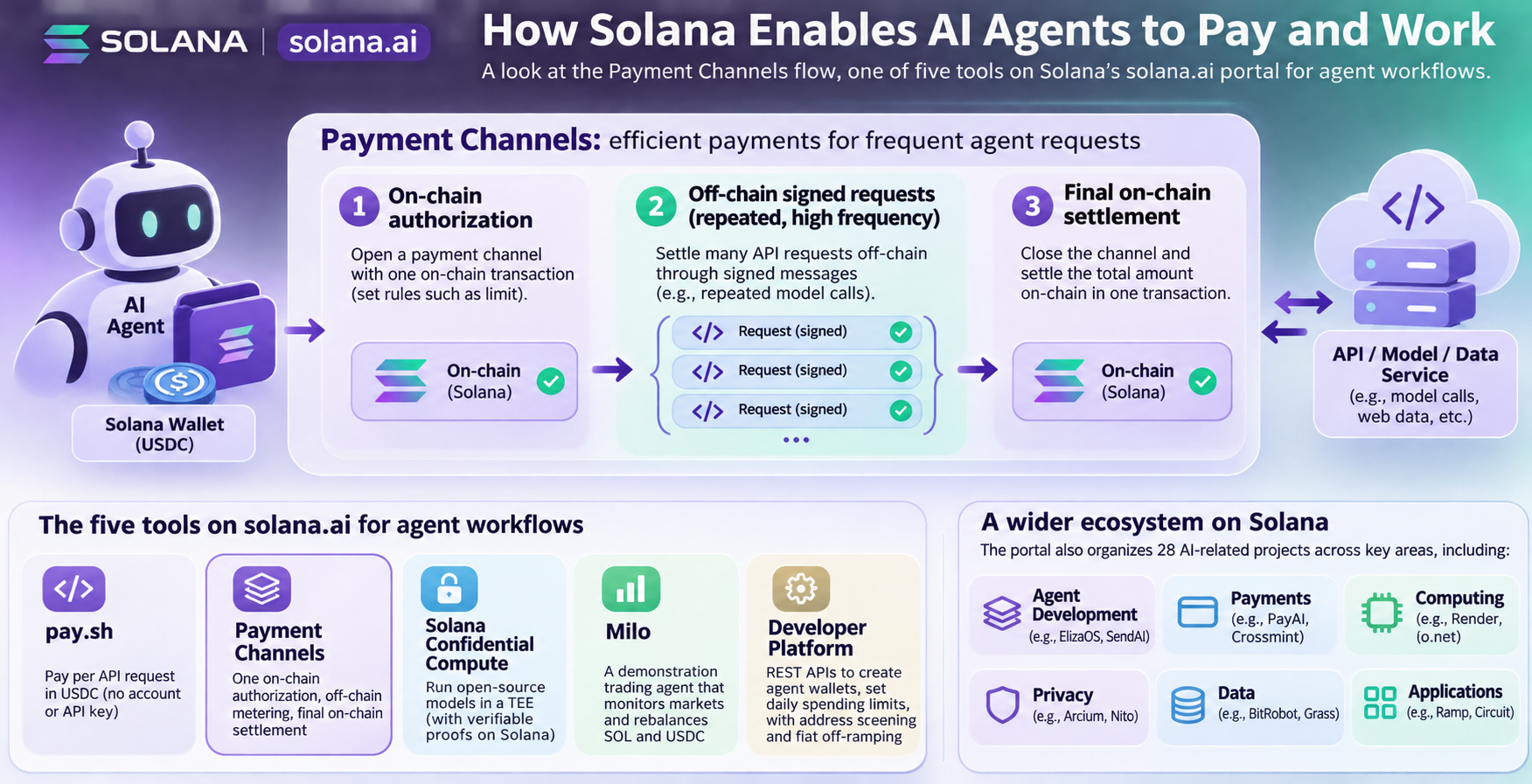
Five tools for agent workflows
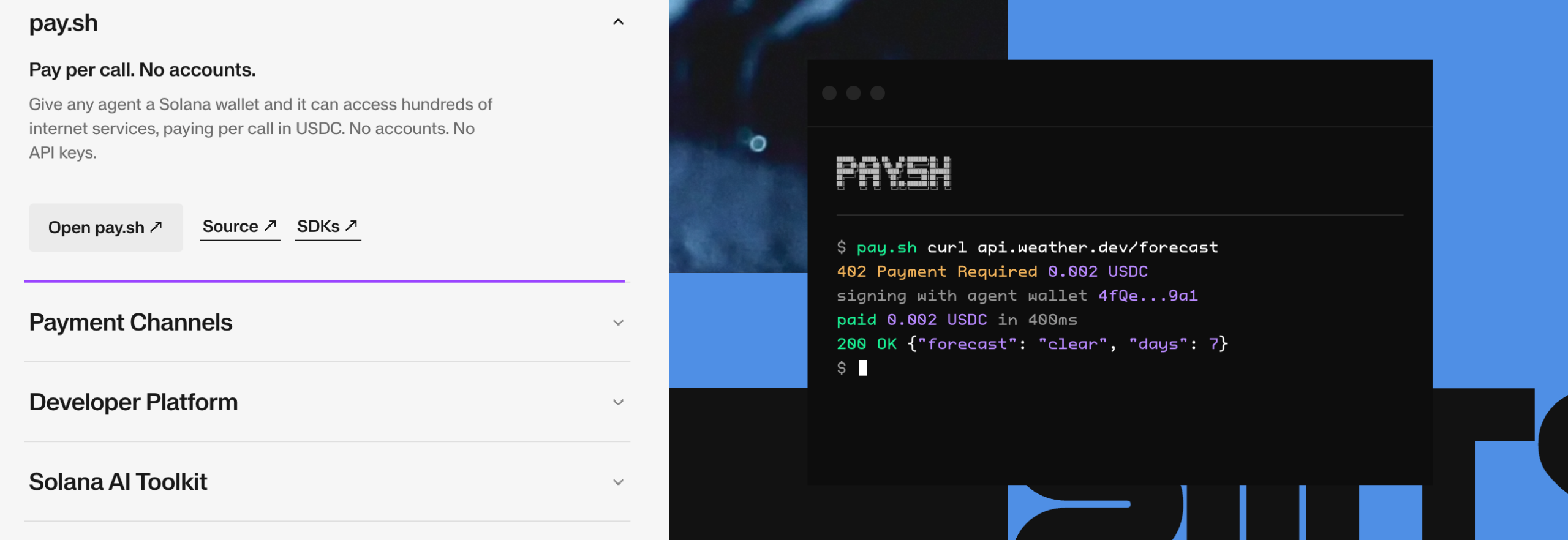
pay.sh is presented as a way for an agent with a Solana wallet to pay for individual API requests in USDC, without a conventional account or API key. In the example described in the report, a weather-service call costs 0.002 USDC. That is a product example, not evidence of widespread use.
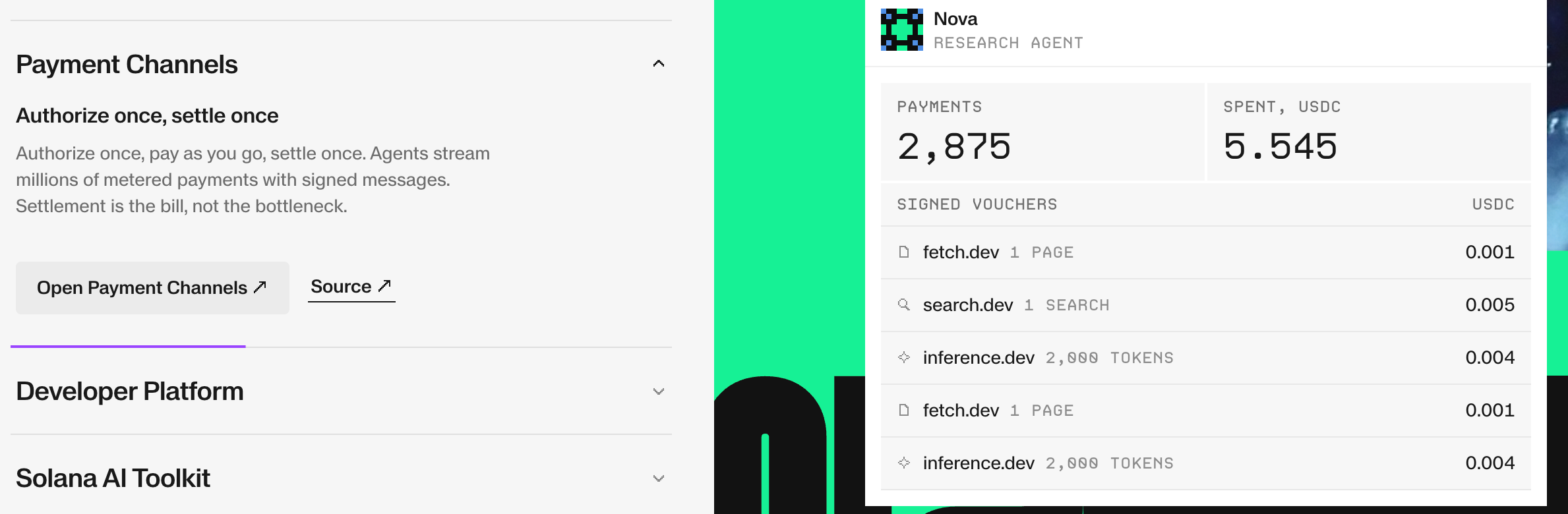
Payment Channels address requests too frequent to settle individually on-chain. The described design starts with one on-chain authorization, meters requests through off-chain signatures, then performs a final on-chain settlement. The report positions this for high-frequency uses such as repeated model calls.
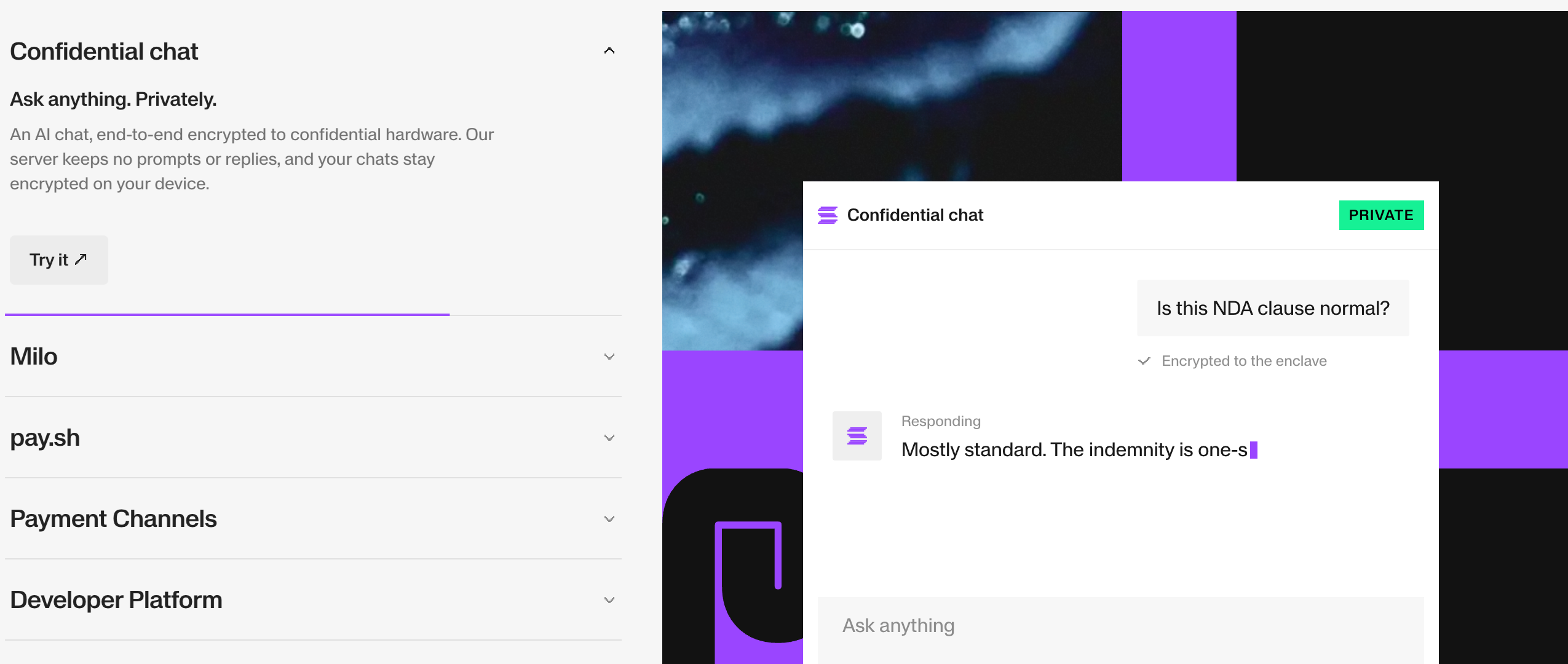
Solana Confidential Compute, developed with Nito, uses a trusted execution environment—a hardware-isolated computing environment—to run an open-source model off-chain. The reported demonstration ran GPT-OSS 120B. According to the product description, prompts and uploaded PDFs are encrypted locally, servers do not retain plaintext, and hardware-related cryptographic proofs are verified on Solana. The report does not provide an independent security assessment of those claims.
Milo is a demonstration trading agent described as monitoring markets around the clock and rebalancing SOL and USDC positions. The Developer Platform provides REST APIs for creating agent wallets and setting daily spending limits; the report also says it includes address screening and fiat off-ramping features. These descriptions do not establish production performance or adoption.
What the portal brings together
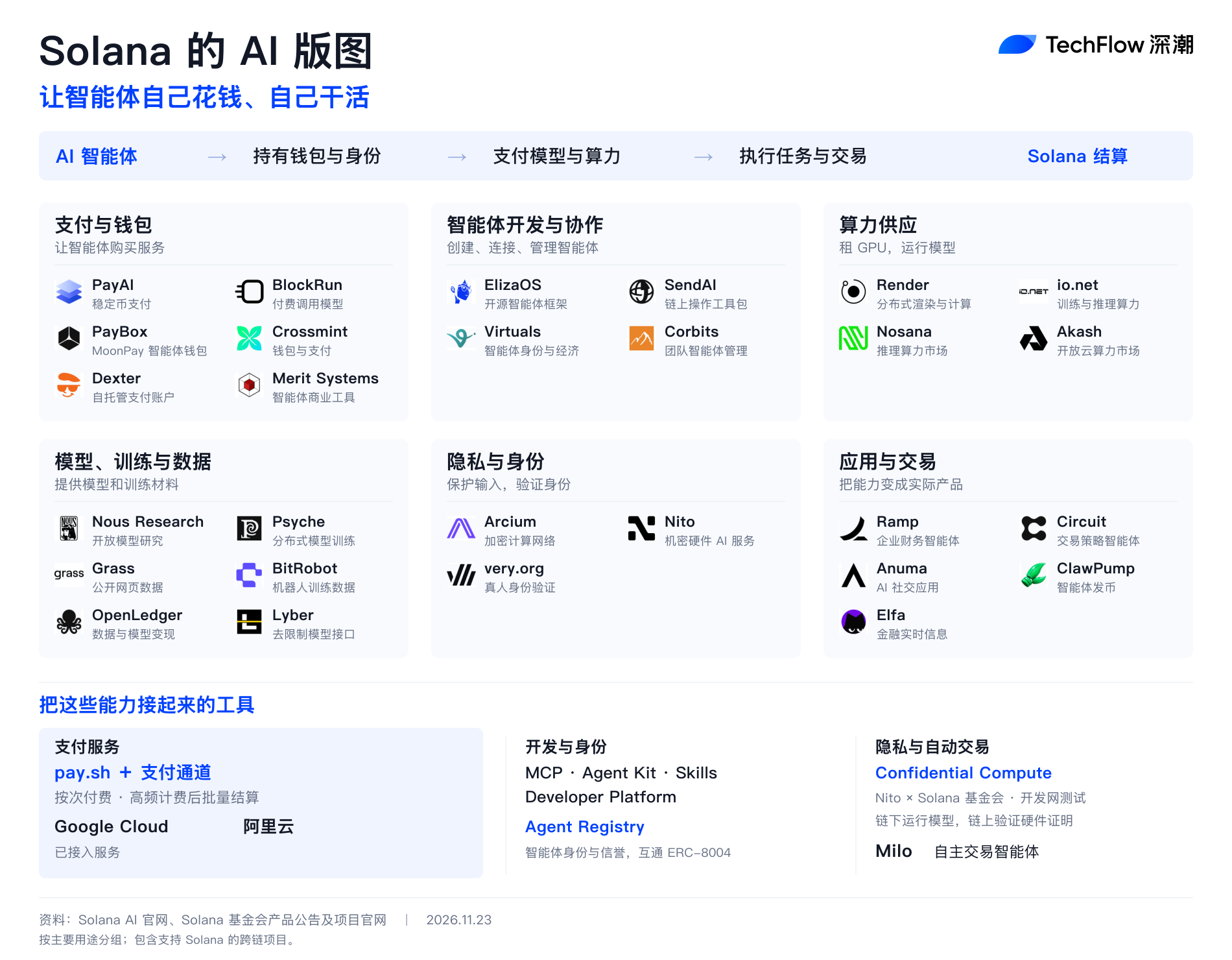
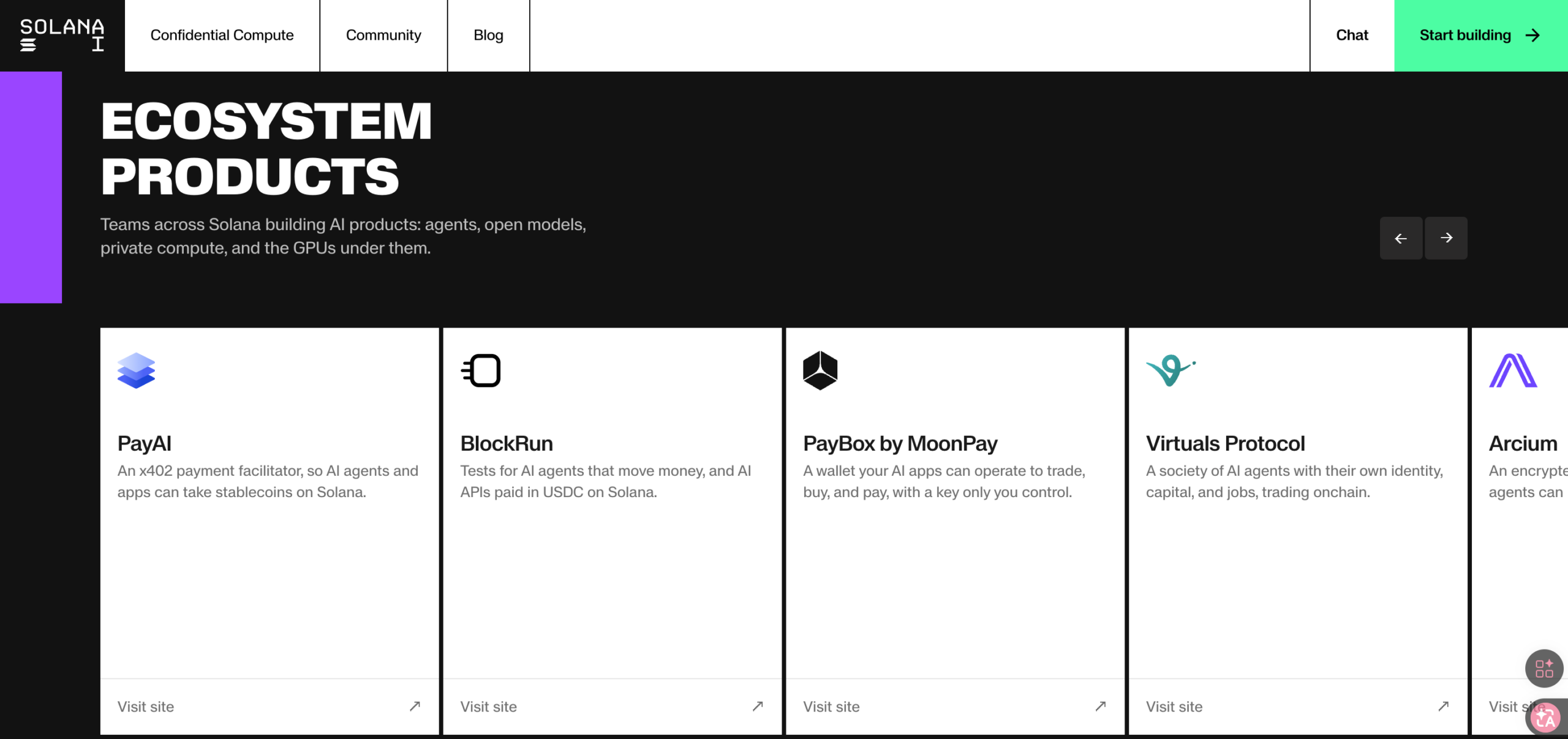
The portal also organizes 28 projects across areas including agent development, payments, computing, data, privacy and applications. The report names ElizaOS and SendAI among development tools; PayAI and Crossmint among payment services; Render and io.net among computing projects; and Arcium and Nito among privacy-related projects. It says the portal reports more than 37 million cumulative agent API payment transactions on Solana using x402. That figure is attributed to the portal, not independently verified in the report.
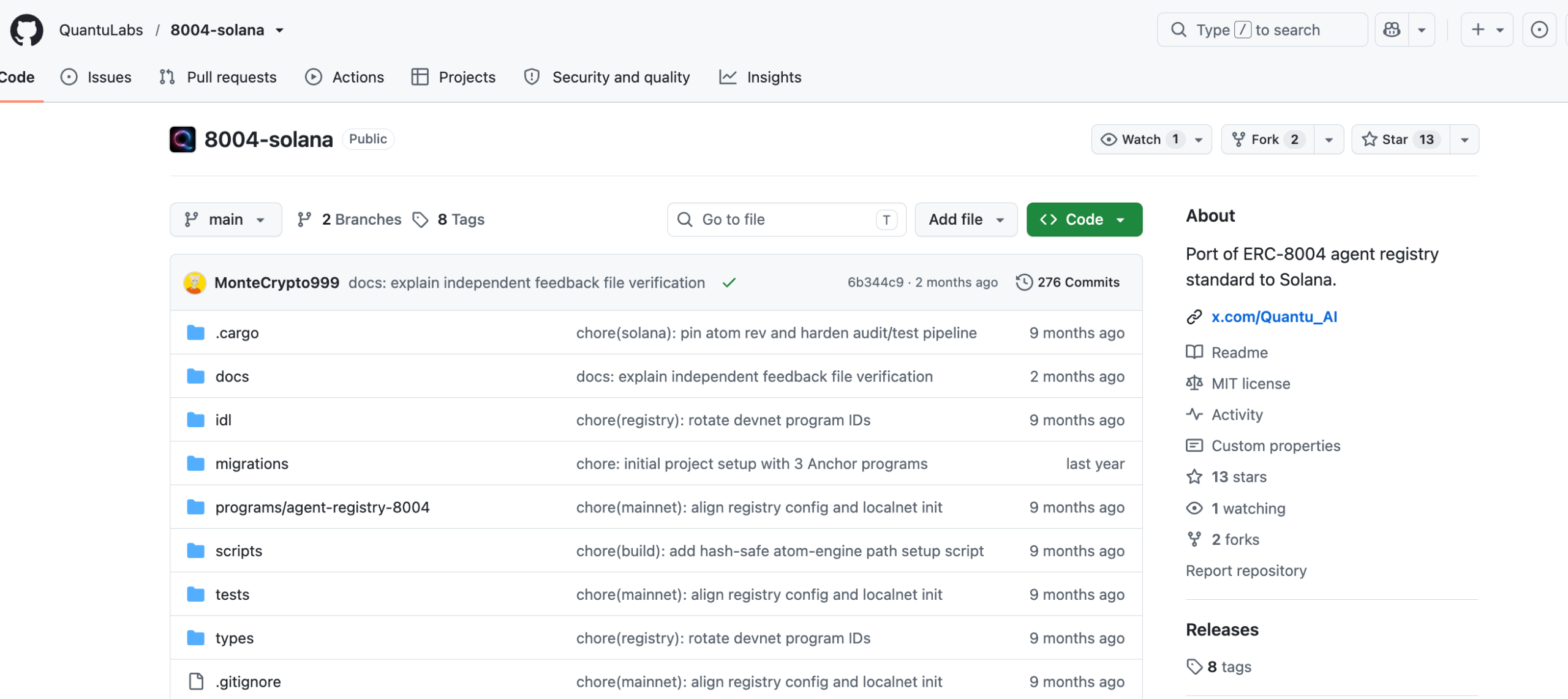
On the developer side, the report identifies a Solana MCP remote server for Cursor and Claude Code, an Agent Kit supporting more than 60 on-chain operations, and an 8004-solana specification. TechFlow’s author interprets these alongside x402 as part of a competitive push to make Solana a default payment and execution network for agents. The same author cautions that it remains unclear how much demand for agent purchases outside crypto will move from conventional payment systems onto blockchain rails. The portal documents tools and an ecosystem directory; it does not, by itself, resolve that adoption question.