
For Ethereum builders, the proposed change concerns upgrade priorities, not a change to today’s slot timing. In a report published November 12, 2026, Ethlabs said it would withdraw its Quick Slots proposal from the planned Hegotá upgrade and redirect resources toward “pqai27,” a roadmap it proposed for preparing Ethereum for quantum-computing threats and increasingly capable artificial intelligence by 2027.
Ethlabs had backed EIP-8198, or Quick Slots, which would initially reduce the time allotted for each Ethereum block, known as a slot, from 12 seconds to 10 seconds. The group said it still intends to pursue faster slots in 2028.
For Hegotá, Ethlabs said the planned censorship-resistance feature FOCIL should proceed only if it does not jeopardize quantum readiness. It described Frame Transactions, intended to allow more flexible account authentication, as central to its proposed transition. Ethlabs said Glamsterdam, the upgrade planned before Hegotá, should proceed as planned.
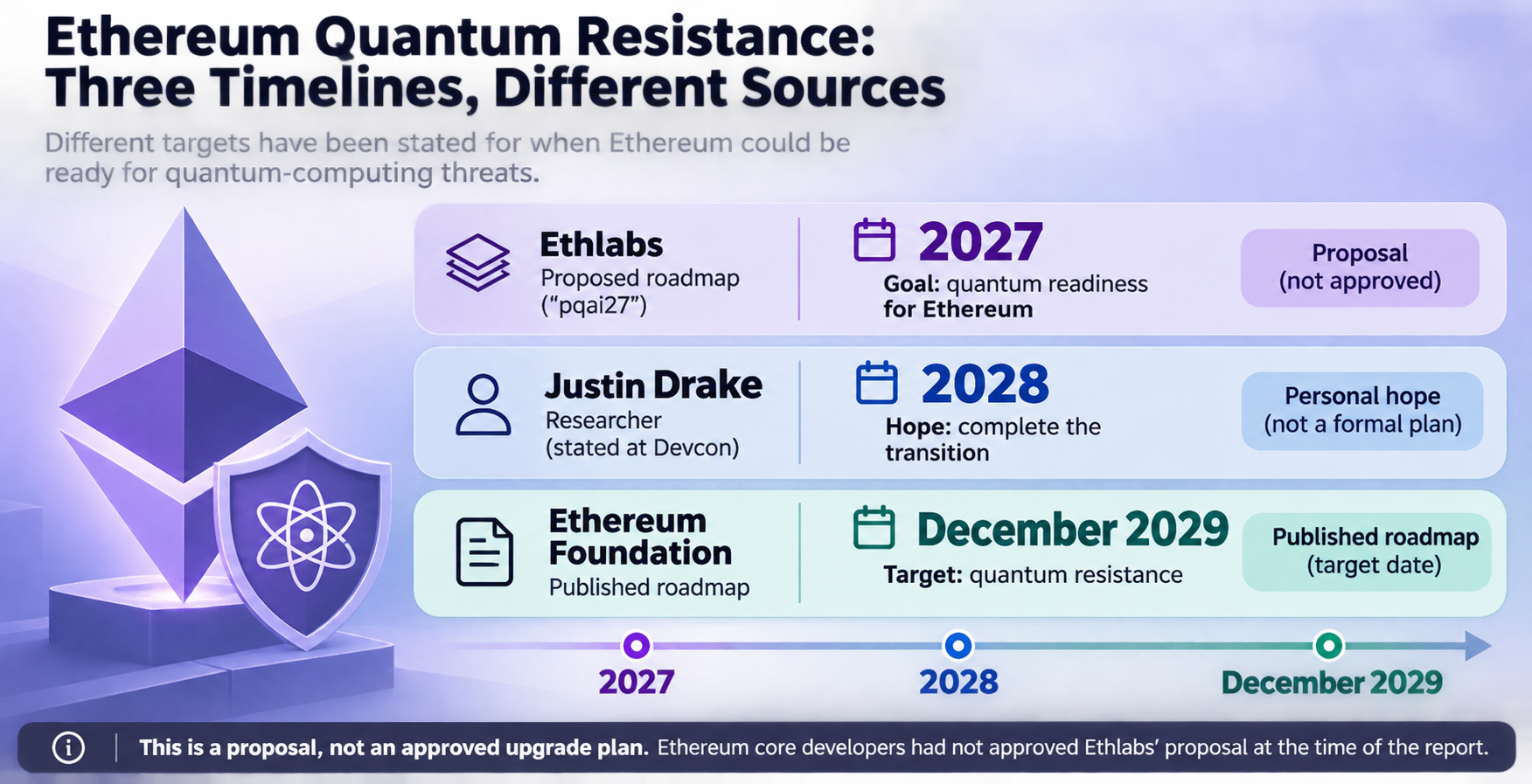
This is a proposal, not an approved upgrade plan. Ethereum core developers had not approved it at the time of the report. The Ethereum Foundation’s published roadmap still targeted December 2029 for quantum resistance, while researcher Justin Drake said at Devcon that he hoped to complete the transition in 2028.
Source: cointelegraph.com (originally published 2026-11-12 18:30 UTC+8)